| Feature | Clarwe "Anti-Black Box" Ecosystem | Standard Digital Brokers |
|---|---|---|
| Engineering Review | Human-Led: Every CAD file is audited by a degreed manufacturing engineer for DFM viability before quoting. | Algorithmic: Automated pricing engines; high risk of "hidden" manufacturing failures. |
| Quality Control | 100% In-House: Centralized metrology labs perform final CMM verification on every part before shipping. | Distributed: Parts often ship directly from unverified sub-tier shops with inconsistent QC. |
| Documentation | Audit-Ready: AS9102 FAIRs, MTCs, and RoHS/REACH compliance provided by default. | Conditional: Compliance packages are often paid add-ons or require specialized, slow requests. |
| Scaling Strategy | Architecture-Driven: Dynamic shifts from VMC to automated HMC pallet pools to optimize TCO. | Volume-Driven: Simple tiered pricing based on basic quantity inputs, lacking manufacturing strategy. |
| Risk Profile | Eliminated: We own the final verification gate, preventing "ship-and-pray" defects. | Accepted: The buyer accepts the risk of quality variance as a trade-off for speed. |

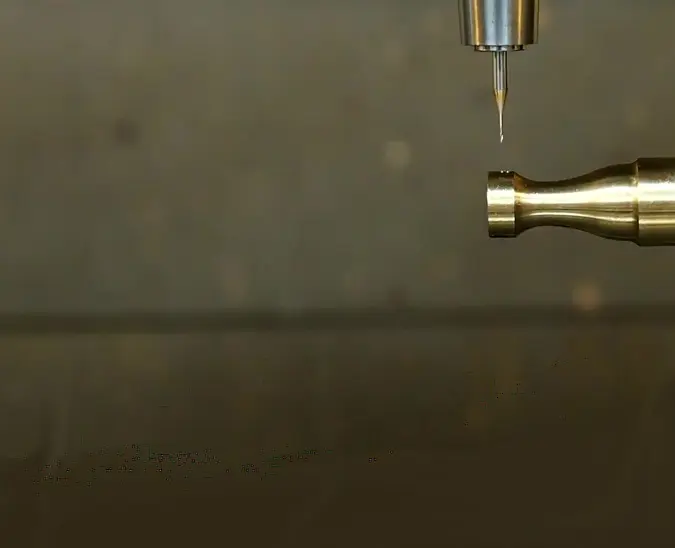
We run initial builds on high-rigidity Vertical Machining Centers (VMCs). Our engineering team validates GD&T and establishes optimized feed-and-speed baselines here, ensuring that as-built parts meet print specifications before we commit to high-volume production paths.
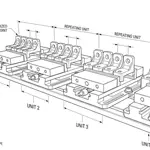
To balance efficiency and cost, we shift to multi-vise setups and custom soft-jaw fixturing. This consolidates tool changes and streamlines cycle times, providing a cost-effective transition for mid-volume batches.
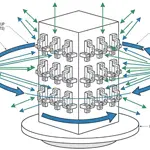
We route high-volume runs to Horizontal Machining Centers (HMCs). By utilizing tombstone fixturing and automated pallet pools, we maximize spindle uptime and minimize manual intervention, securing the cost structure required for Tier-1 enterprise applications.
| Tolerance Tier | Linear Dimensional Accuracy | True Position Accuracy | Standard Surface Finish (Ra) | Quality - Verification Method |
|---|---|---|---|---|
| Standard | ±0.125 mm (±0.005") |
Ø 0.20 mm | 3.2 μm (125 μin) |
Digital Caliper / Micrometer Sampling |
| Precision | ±0.025 mm (±0.001") |
Ø 0.05 mm | 1.6 μm (63 μin) |
Height Gage & Dial Indicator Matrix |
| High-Precision | ±0.010 mm (±0.0004") |
Ø 0.02 mm | 0.8 μm (32 μin) |
Automated Optical Gaging System |
| Ultra-Precision | ±0.005 mm (±0.0002") |
Ø 0.01 mm | 0.4 μm (16 μin) |
Coordinate Measuring Machine (CMM) |
| Design Feature | Technical DFM Guideline | Engineering & Risk-Mitigation Justification |
|---|---|---|
| Internal Radii | Must be greater than 1/3 of total cavity depth | Eliminates tool deflection, prevents end-mill chatter, and avoids the need for high-cost custom tooling. |
| Wall Thickness | Greater than 0.75 mm (Metals); Greater than 1.5 mm (Plastics) |
Mitigates structural warpage, geometric distortion, and vibration during roughing passes. |
| Hole Depth | Recommended < 4× diameter; Absolute Max 10× diameter |
Prevents drill wander, ensures proper chip evacuation, and maintains internal surface finish. |
| Thread Depth | Maximum 2× nominal hole diameter | Thread engagement strength plateaus beyond 1.5× diameter; additional depth increases the risk of tap breakage. |
Risk Mitigation Rule: Automated platforms accept risky CAD files and flag them post-payment. Clarwe requires a human engineering review of these specific thresholds before finalizing an interactive quote.
| Material Classification | Core Grades Supported | Primary Structural & Functional Characteristics | Industry |
|---|---|---|---|
| Aluminum Alloys | 6061-T6, 7075-T6, 2024, 5052 | High strength-to-weight ratio, rapid thermal dissipation, high machinability. | Aerospace, Robotics, Automation |
| Stainless Steels | 304/304L, 316/316L, 17-4 PH | High tensile strength, corrosion resistance, predictable wear profiles. | Medical Devices, Marine, Energy |
| Titanium Alloys | Ti-6Al-4V (Grade 5), Grade 2 | Extreme strength-to-weight ratio, biocompatibility, high thermal stability. | Aerospace Bulkheads, Implants |
| Tool Steels & Superalloys | D2, O1, Inconel 718, Hastelloy | Hot-hardness, oxidation resistance at high temperatures, impact resistance. | Turbines, Tooling Dies, Downhole Oil |
| Copper & Brass | C101, C110, C360 Brass | Electrical and thermal conductivity, low magnetic permeability, low friction. | Semiconductor, Power Electronics |
Compliance Note: Full Material Test Certifications (MTCs) confirming chemical and physical trace properties are provided by default with every order.
| Material Classification | Core Grades Supported | Primary Structural & Functional Characteristics | Industry |
|---|---|---|---|
| High-Performance | PEEK (Unfilled/GF), Ultem 1000, PTFE | Thermal resistance, continuous dielectric strength, chemical inertness. | Aerospace Avionics, Medical |
| Acetal & Nylon | Delrin (POM-C/POM-H), Nylon 6/6 | Mechanical stiffness, low friction coefficients, dimensional stability. | Gears, Bushings, Spacers |
| Engineering Plastics | ABS (Flame Retardant), Polycarbonate, HDPE | High impact resistance, optical clarity (PMMA), moisture barrier properties. | Fluid Management, Enclosures |
| Finish Type | Technical Specification | Primary Function | Relevant Compliance Standard |
|---|---|---|---|
| As-Milled | Machine finishes from 0.8μm to 3.2μm Ra | Retains witness marks; raw structural use. | ISO 1302 |
| Bead Blast | Fine glass bead media pressure application | Uniform matte appearance; removes tool marks. | ASTM D2200 |
| Anodizing (Type II / III) | Sulfuric / Chromic acid electrochemical bath | Corrosion resistance, surface hardness, color dye. | MIL-A-8625 TYPE II / III |
| Chem Film / Alodine | Chromate conversion coating | Electrical conductivity, corrosion protection. | MIL-DTL-5541 |
| Electroless Nickel Plating | Auto-catalytic chemical plating process | Wear resistance, uniform thickness inside cavities. | AMS-QQ-N-290 |
Bypass the risks of automated digital brokers. Secure your supply chain with human-led DFM reviews, true 5-axis capacity, and 100% in-house metrology on every order, from single prototypes to 10,000+ unit production runs.
Upload CAD for Engineer ReviewUnlike standard digital brokers that blind-ship parts directly from unverified sub-tier shops, Clarwe operates a strictly controlled, closed-loop quality ecosystem. While we leverage a massive network of ISO-certified partners to secure immediate machine capacity, 100% of final inspection happens in-house. Every single component must pass through our centralized metrology labs for CMM verification before it is cleared to ship to your facility.
We deliver comprehensive, audit-ready data packages designed for strict aerospace, medical, and industrial compliance. Material Test Certifications (MTCs) with full physical and chemical trace properties are provided by default. We also generate AS9102 First Article Inspection Reports (FAIRs), Certificates of Conformance (CoC), and standard RoHS/REACH compliance documentation without the delays typical of decentralized broker models.
No. Automated quoting algorithms frequently miss hidden manufacturing risks like complex tolerance stack-ups, micro-chatter, or thin-wall deflection. At Clarwe, we mandate human oversight. A dedicated manufacturing engineer manually reviews your CAD model for true Design for Manufacturing (DFM) viability before finalizing an interactive quote. We validate physical manufacturing feasibility, not just software geometry.
Yes. Our ecosystem is explicitly architected to eliminate the risk of switching vendors as your volume scales. We launch your initial prototypes on high-rigidity Vertical Machining Centers (VMCs) to validate GD&T and cutting parameters. As you transition to mass production, we seamlessly shift your exact tool paths and quality protocols to high-capacity Horizontal Machining Centers (HMCs) equipped with automated pallet pools, driving down your unit cost without sacrificing first-article precision.