
Mild steel 1018 is a low-carbon steel grade in the AISI/SAE 10xx family, valued for its balanced mechanical properties and consistent performance. It combines moderate tensile and yield strength with good ductility and toughness, making it suitable for parts that see general-purpose mechanical loads. The material offers excellent weldability and reliable machinability, supporting tight tolerances and stable dimensional control in production. Typical applications include shafts, gears, bearings, levers, brackets and similar components supplied in bar, plate and other common mill forms.
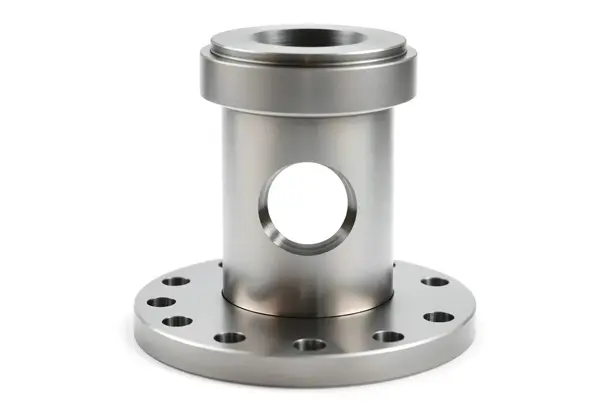
For higher strength applications, see Mild Steel 1045, or for structural frames and baseplates, consider Mild Steel A36.
Properties of Mild Steel 1018
| Ultimate tensile strength (MPa) | 380-450 |
| Yield strength (MPa) | 220-350 |
| Young's modulus (modulus of elasticity) (GPa) | 190-205 |
| Elongation at break(%) | 13-25 |
| Fatigue Strength (MPa) | 78 |
| Hardness (Brinell) | 126 HB |
| Density (g/cm³) | 7.87 |
| Corrosion resistance | Poor |
| Weldability | Excellent |
| Maximum service temperature(°C) | 500 |
| Thermal expansion coefficent (
10-6/°C) |
11.5-12 |
| Thermal conductivity (W/(m⋅°C)) | 52 |
| Electrical resistivity (μΩ.cm) | 16-18 |
| Post-Processing | Cold working |
| Magnetism | Semi-magnetic |
| Common Applications | Bearings, Levers and Brackets |
CNC machining Mild Steel 1018
Mild steel 1018 has good machinability and is well suited to CNC milling, turning, drilling and tapping with standard tooling and coolant. Its 380–450 MPa ultimate tensile strength and 126 HB hardness support efficient material removal, stable chip formation and good tool life when feeds and speeds are tuned correctly. The steel is commonly used where consistent dimensional control and tighter tolerances are required than those typically specified for structural grades, especially on shafts, bearings, levers and brackets.
Available Finishes
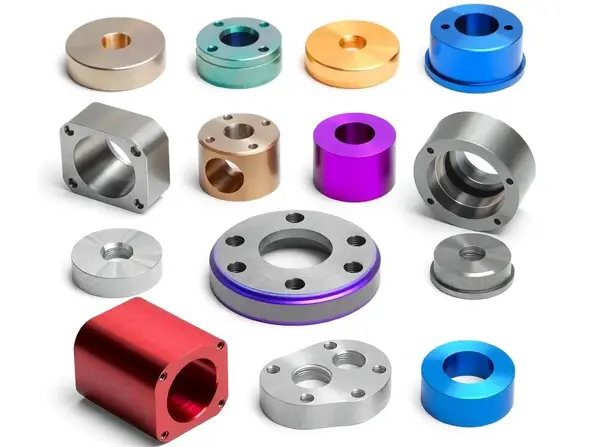
Surface finishes help mild steel 1018 parts achieve more consistent dimensional performance, improved wear behavior and better control over friction at functional interfaces. Protective finishing also reduces the risk of surface corrosion, which is important because the base material has limited inherent corrosion resistance in humid or contaminated environments. For external or visible components, finishing can improve appearance, cleanliness and the uniformity of edges or radii. In many projects, finishes are specified alongside surface finishes requirements to ensure that mild steel 1018 CNC machining outputs meet the necessary performance and visual criteria over the part’s service life.
| As machined (Standard) | Black oxide |
| As machined (Medium) | Brushed finish |
| As machined (Fine) | Chromate conversion coating |
| Electroless plating | Passivation |
| Electroplating | Polishing |
| Electropolishing | Sand blasting |
| Hand polishing | Tumbling |
| Powder coating | Media blasting |
| Bead blasting |
Frequently Asked Questions
What are the key mechanical properties of mild steel 1018 for general engineering use?
Mild steel 1018 typically provides ultimate tensile strength in the range of 380–450 MPa and yield strength around 220–350 MPa, with elongation at break between about 13–25%. This combination offers moderate strength with good ductility and toughness for general-purpose components under standard service loads.
How good is the machinability of mild steel 1018 and what does it mean for tolerances?
Mild steel 1018 has good machinability, often rated around 70–78% relative to free‑machining steels, allowing efficient material removal with controlled tool wear. This supports tight tolerances and consistent surface quality on turned, milled and drilled features when appropriate tooling, feeds, speeds and coolant strategies are used.
For which types of applications is mild steel 1018 generally preferred over higher-carbon steels?
Mild steel 1018 is commonly selected for components such as shafts, gears, bearings, levers, brackets, fasteners and general machinery parts that require moderate strength, good ductility and straightforward fabrication. It is especially useful where excellent weldability, reliable forming behavior and the option for carburized or case-hardened surfaces are more important than very high core hardness or high-temperature strength.