What Is Plastic Fabrication?
Plastic fabrication is a diverse set of manufacturing processes used to transform raw plastic materials into finished parts and products across industries such as automotive, electronics, medical, aerospace, construction, and consumer goods. Unlike metalworking, plastic fabrication leverages the unique properties of thermoplastics and thermosetting resins to achieve cost-effective, lightweight, and durable components, with the optimal process depending on volume, geometry, material, tolerances, and lead time.
Types of Plastics Used in Fabrication
Thermoplastics
Thermoplastics soften when heated and solidify when cooled without permanent chemical change, allowing them to be reshaped multiple times and making them ideal for a wide range of fabrication methods and recycling.They are the most commonly used plastics in fabrication due to their versatility, ease of processing, and breadth of property ranges.

| Plastic | Key Properties | Typical Applications |
|---|---|---|
| Polyethylene (PE) | Lightweight, flexible, excellent chemical resistance | Packaging, containers, tubing, films |
| Polypropylene (PP) | High melting point, chemical resistance, good fatigue resistance | Automotive parts, appliances, storage tanks |
| Polyvinyl Chloride (PVC) | Versatile, durable, flame resistant | Pipes, fittings, profiles, cable insulation |
| Polycarbonate (PC) | Transparent, impact resistant, heat resistant | Safety glazing, guards, lenses, housings |
| Polyethylene Terephthalate (PET) | Clear, strong, lightweight, recyclable | Bottles, food packaging, engineering parts |
| Acrylonitrile Butadiene Styrene (ABS) | Tough, impact resistant, good surface finish | Enclosures, automotive parts, consumer products |
| Polymethyl Methacrylate (PMMA/Acrylic) | Optical clarity, weather resistant | Displays, signage, skylights, covers |
| Polystyrene (PS) | Lightweight, rigid, good insulator | Disposable items, packaging, models |
| Polyoxymethylene (POM/Acetal) |
Low friction, high stiffness, excellent dimensional stability | Gears, bushings, precision mechanical parts |
| Polyphenylene Sulfide (PPS) |
High temperature and chemical resistance | Electronics, under-the-hood automotive parts |
Thermosetting Plastics
Thermosetting plastics form a rigid, cross‑linked structure during curing and cannot be remelted, which gives them excellent dimensional stability, heat resistance, and long-term performance in demanding environments.They are widely used for structural components, electrical insulation, and applications where high temperature and chemical resistance are critical.
| Plastic | Key Properties | Typical Applications |
|---|---|---|
| Epoxy Resin | Excellent adhesion, high strength, chemical resistance | Composites, adhesives, electronic encapsulation |
| Polyester Resin | Good weather resistance, high strength-to-weight ratio | Boat hulls, panels, structural laminates |
| Phenolic Resin |
High temperature resistance, flame resistance | Electrical insulators, friction parts, aerospace |
| Polyurethane (PU) |
Abrasion resistance, elasticity, insulation | Foam, seals, wheels, flexible components |
| Vinyl Ester Resin |
High corrosion resistance, good mechanical properties | Chemical tanks, marine parts, industrial vessels |
| Silicone Rubber |
High temperature resistance, flexibility, electrical insulation | Seals, gaskets, medical and food-contact parts |
| Melamine Resin |
Hard, scratch resistant, chemical resistant | Countertops, laminates, tableware |
Common Plastic Fabrication Methods
| Selecting the right plastic fabrication method is crucial for balancing cost, quality, tolerances, and lead time for your project. Below are the main methods, with how they work, where they fit best, and when they are typically used. |
![]() |
|---|
| Method | How It Works | Best For | Typical Volume Range |
|---|---|---|---|
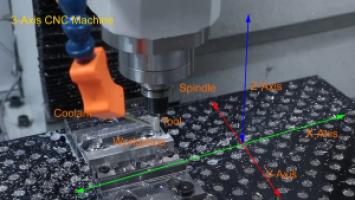
| Plastic CNC Machining | Subtractive cutting of solid plastic blocks using CNC mills/lathes | Tight-tolerance parts, prototypes, low-volume custom components | 1–500 units |
| Injection Molding | Molten plastic is injected into a closed mold and cooled into net shape | High-volume parts, complex geometries, repeatability | 5,000+ units |
| Thermoforming (Vacuum/Pressure) |
Heated sheet is formed over a mold using vacuum or pressure | Large panels, enclosures, trays, medium-volume parts | 250–5,000 units |
| Blow Molding |
Air inflates hot plastic inside a mold to form hollow shapes | Bottles, tanks, ducts, hollow containers | 3,000+ units |
| Extrusion |
Melt is forced through a die to create continuous profiles | Pipes, profiles, tubing, strips | Continuous / high volume |
| Compression Molding |
Heated material is compressed in a mold and cured | Thermosets, thick or reinforced parts | Low–high, depending on tooling |
| Rotational Molding |
Powder or liquid plastic is heated and rotated in a hollow mold | Large hollow parts, tanks, playground equipment | 50–2,000 units |
| Plastic Welding |
Heat and pressure fuse compatible plastic parts together | Tanks, ducts, assemblies, repairs | Low–medium |
| Filament Winding |
Fiber and resin are wound on a mandrel and cured | High-strength tubes, pressure vessels | Low–medium |
| Resin Transfer Molding (RTM) |
Resin is injected into a closed mold with dry fiber preform | Structural composites, panels | Low–medium |
| Reaction Injection Molding (RIM) |
Two liquid components react and cure in a mold | Large PU parts, housings, structural skins | Medium–high |
| Plastic Lamination |
Sheets are bonded by heat/pressure/adhesive | Panels, decorative laminates, glazing | Low–high |
| Pultrusion |
Fibers are pulled through resin and a heated die | Structural profiles, beams, rods | High, continuous |
| FDM 3D Printing |
Thermoplastic filament is extruded layer by layer | Prototypes, fixtures, low-volume functional parts | 1–100 units |
| SLA/SLS 3D Printing |
Resin or powder is cured/sintered layer by layer by light/laser | High-detail prototypes, complex geometries | 1–200 units |
How to Choose the Right Plastic Fabrication Method
Choosing the optimal plastic fabrication process involves matching your part and business requirements with what each method does best.Use the factors below as a practical framework when evaluating options or discussing your project with a manufacturing partner.
Production Volume
- Low volume (1–500 units): CNC machining, FDM/SLA/SLS 3D printing, vacuum casting, or simple thermoforming are usually the most economical.
- Medium volume (500–5,000 units): Thermoforming, compression molding, RIM, or rotational molding balance tooling cost and per-part pricing.
- High volume (5,000+ units): Injection molding, extrusion, and blow molding are typically preferred due to low per-unit costs after tooling.
Part Complexity and Geometry
- Complex 3D shapes with thin walls and fine details: Injection molding or SLS/SLA.
- Large, shallow-draw parts or panels: Thermoforming.
- Hollow tanks and containers: Blow molding or rotational molding.
- Precise features and tight tolerances: CNC machining or high-precision molding.
Material and Performance Requirements
- High impact and toughness: PC, ABS, nylon with CNC or molding.
- Chemical exposure: PVC, PP, PTFE, vinyl ester or epoxy composites.
- High temperature: PPS, high-performance thermoplastics, or thermosets like phenolic and epoxy.
- Optical clarity: PC and PMMA, typically via injection molding or machining/finishing.
Tolerances, Finish, and Lead Time
- Tight tolerances (around ±0.1–0.25 mm): CNC machining, injection molding, SLA.
- Standard tolerances (around ±0.5–1 mm): Thermoforming, rotational molding, compression molding.
- Fastest path to parts: 3D printing and CNC machining, often in days to a few weeks.
| A practical workflow is: define your volume, geometry, environment, and tolerance requirements; shortlist 2–3 processes; then compare cost, lead time, and risk with your fabrication partner. |
Injection Molding vs Thermoforming
For many projects, the real decision is between injection molding and thermoforming, especially for housings, panels, and enclosures.The table below summarizes how they compare.
| Factor | Injection Molding | Thermoforming |
|---|---|---|
| Tooling Cost | High (complex steel or aluminum molds) | Lower (single-sided molds) |
| Best Volume Range | High volume (typically 5,000+ units) | Low–medium (≈250–5,000 units) |
| Part Complexity |
Excellent for complex geometry, ribs, clips |
Best for relatively shallow, open shapes |
| Detail and Tolerances |
Very high detail, tight tolerances |
Good detail on mold side, moderate tolerances |
| Typical Lead Time |
8–16 weeks including tooling |
4–10 weeks including tooling |
| Cost Per Unit |
Very low at high volumes |
Lower tooling, higher per-part vs molding at scale |
| Ideal Use Cases |
Consumer products, high-volume components |
Panels, covers, trays, larger enclosures |
In many cases, thermoforming is ideal for early-stage or mid-volume programs, while injection molding becomes more cost-effective once you move into long-term, high-volume production.
Advantages and Limitations of Plastic Fabrication
Advantages
- Cost-effective: Many plastic fabrication processes offer lower tooling and per-part costs than machined metal solutions at comparable volumes.
- Lightweight: Plastics significantly reduce weight, which is valuable in automotive, aerospace, and portable products.
- Design freedom: Complex geometries, undercuts, textures, integrated clips, and living hinges are possible that would be difficult or costly in metal.
- Corrosion and chemical resistance: Many plastics withstand moisture, chemicals, and corrosion better than metals in aggressive environments.
- Electrical and thermal insulation: Plastics naturally insulate, making them ideal around electronics and in building applications.
- Rapid prototyping: CNC and 3D printing enable fast iteration before committing to high tooling costs.
Limitations
- Environmental impact: Many plastics are non-biodegradable, and poor disposal practices lead to long-term environmental challenges.
- Temperature limits: Most commodity plastics suffer at elevated temperatures and may deform, creep, or lose properties over time.
- Material selection complexity: Hundreds of formulations exist; picking the wrong one can lead to premature failure or performance issues.
- Regulatory and compliance: Medical, food-contact, and other sensitive sectors impose strict rules on what plastics can be used and how.
The Plastic Fabrication Process
1. Design and Prototyping
The process begins with a detailed CAD model that captures geometry, tolerances, draft angles, wall thickness, ribs, and assembly features aligned with the selected fabrication method.
Early prototypes—often via CNC machining or 3D printing—validate form, fit, and function before investment in tooling.
2. Material Selection
Engineers select a plastic material based on mechanical strength, stiffness, impact resistance, thermal performance, chemical exposure, regulatory constraints, and cost.
For critical applications, datasheets, simulation, and physical testing are used to confirm performance under real-world operating conditions.
3. Tooling Preparation
Depending on the process, this may include cutting steel molds, machining forming tools, manufacturing extrusion dies, or building fixtures and jigs.
High-quality tooling is crucial for repeatability, surface finish, and cycle time.
4. Material Preparation
Resins may be dried, mixed with additives, colorants, or reinforcements, and then heated to the appropriate processing temperature.
Proper material conditioning helps prevent defects like voids, bubbles, or warping.
5. Fabrication and Forming
The prepared material is processed through the selected method—such as molding, machining, forming, or printing—while controlling key parameters like temperature, pressure, and cycle time.
Stable, repeatable process settings are essential to ensure consistent part quality across batches.
6. Finishing Operations
Typical post-processing includes deflashing, trimming, drilling, tapping, deburring, polishing, painting, coating, labeling, and assembly of multi-part products.
Finishing steps improve appearance, safety, and usability while meeting dimensional and cosmetic requirements.
7. Quality Control and Testing
Dimensional inspections, visual checks, functional tests, and where needed, environmental or mechanical testing are performed to verify compliance with specifications.
Documentation such as inspection reports and material certifications supports traceability and regulatory compliance.
8. Packaging and Shipping
Parts are cleaned, packaged to prevent damage, labeled, and prepared for shipment to customers or downstream assembly locations.
Proper packaging maintains quality through logistics and ensures parts arrive ready for use.
Applications of Plastic Fabrication
Plastic fabrication underpins products and components in a wide range of industries due to its versatility and performance-to-cost ratio.
- Automotive: Interior trim, brackets, ducts, tanks, lighting components, clips, and connectors.
- Aerospace and defense: Interior panels, ducts, radomes, composite structures, brackets, and housings.
- Electronics and electrical: Housings, connectors, insulating components, cable management, device enclosures.
- Medical and healthcare: Disposables (syringes, tubing), device housings, trays, diagnostic components, packaging.
- Packaging: Bottles, containers, caps, films, blisters, trays for food, beverage, and consumer goods.
- Construction and infrastructure: Pipes, fittings, sheets, cladding, insulation products, window and door profiles.
- Industrial and process equipment: Tanks, manifolds, guards, funnels, custom wear-resistant parts.
- Agriculture: Irrigation components, tanks, greenhouse films, bins, covers, and protective structures.
- Consumer and recreation: Sporting goods, cases, furniture, toys, outdoor equipment, and protective gear.


Work With a Plastic Fabrication Partner
Because there are many possible materials and processes, working with an experienced plastic fabrication partner is often the most efficient way to choose the right combination for your parts.A strong partner can help with material selection, design for manufacturability, process choice, cost optimization, and scaling from prototype to high-volume production.
Clarwe, as a global custom manufacturing platform, can support projects from prototypes to production using methods such as CNC machining, injection molding, and other plastic fabrication processes for worldwide customers.By engaging early in the design phase, Clarwe’s team can help you avoid common pitfalls, shorten development cycles, and ensure your plastic parts meet both technical and commercial targets.
Frequently Asked Questions
What is plastic fabrication?
Plastic fabrication refers to the group of manufacturing processes used to turn raw plastic materials—both thermoplastics and thermosets—into finished parts and products using methods like injection molding, thermoforming, CNC machining, extrusion, and 3D printing.
Which plastic fabrication method is best for low-volume production?
For low-volume runs, CNC machining and 3D printing usually offer the best balance of speed and cost because they avoid expensive hard tooling, while vacuum casting or simple thermoforming can also work for certain geometries.
What is the difference between thermoplastics and thermosetting plastics?
Thermoplastics soften and can be reshaped upon reheating, whereas thermosetting plastics cure into a permanent, cross-linked structure that cannot be remelted, giving thermosets superior heat resistance but no recyclability via remelting.
When should I choose injection molding instead of thermoforming?
Injection molding is usually the better choice for complex parts and high-volume programs where per-unit cost and tight tolerances matter, while thermoforming is often preferred for larger, simpler shapes at low-to-medium volumes with lower tooling cost.
How do I choose the right plastic material for my part?
The best approach is to define your mechanical, thermal, chemical, environmental, and regulatory requirements, then shortlist candidate materials and validate them using datasheets, simulations, and, where necessary, physical testing.