
Achieve uniform surface texturing, aggressive mill scale removal, and optimal coating adhesion profiles with our tight-tolerance abrasive blasting capabilities. Whether you need a cosmetic matte finish or rigorous surface preparation for aerospace coatings, Clarwe’s distributed manufacturing network delivers certified, repeatable results.
|
ISO 9001:2015 | AS9100D | ISO 13485:2016 Certified Get a Quote for Sandblasted Parts | Consult Our Engineering Team |
How Our Industrial Sand Blasting Process Works
Unlike bead blasting, which uses spherical media to peen the surface, sand blasting utilizes highly angular abrasives to micro-cut the substrate. This aggressive process is the industry standard for removing heavy mill scale, rust, and old coatings while creating an "anchor profile" for secondary operations like powder coating or industrial painting.
(Image Placeholder: Insert side-by-side macro images here comparing a raw machined aluminum part to a #120 grit sandblasted part)
The Physics of Abrasive Micro-Cutting
Our surface finishing process is governed by controlled kinetic energy transfer, represented by the equation 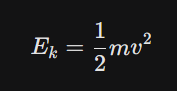
By carefully selecting the mass (m) of the abrasive media—such as heavy steel grit versus lighter aluminum oxide—and regulating the velocity (v) via nozzle pressure, we can precisely dictate the depth and roughness of the final surface profile without compromising the structural integrity of your CNC parts.
Use Cases:
Our industrial sandblasting process is critical for high-performance applications across multiple sectors, including:
- Aerospace brackets preparing for Type III hardcoat anodizing.
- Titanium medical implants requiring specific roughness for osseointegration.
- Automotive chassis components for heavy powder coat adhesion.
Technical Specifications & Blasting Capabilities
We offer highly controlled environments capable of processing both micro-components and large sheet metal fabrications.
| Parameter | Specification / Range |
|---|---|
| Media Options | Aluminum Oxide, Steel Grit, Silicon Carbide, Crushed Glass |
| Grit Sizes | #120 (Standard), #150, #180, #220 |
| Surface Roughness (Ra) | 1.0 µm to 22 µm (sub-micron control available) |
| Media Hardness | 40 – 65 HRC (Steel Grit); 9 Mohs (Al-Oxide) |
| Max Part Dimensions | Up to 2000 mm x 1500 mm x 300 mm |
| Substrate Compatibility | Aluminum, Steel, Stainless Steel, Titanium, Brass, Copper |
| Lead Time | Adding a standard #120 grit blast typically adds 1-2 business days to your standard CNC machining lead time |
Grit Sizing & Surface Roughness (Ra) Targets
-
#120 Grit (Medium-Coarse): Our default grade for general industrial preparation. It provides excellent mechanical interlocking for high-build powder coatings and wet paints.
-
#180 - #220 Grit (Fine): Ideal for cosmetic matte finishes on aluminum and stainless steel components where minimal material removal is required.
Design for Manufacturability (DFM) Guidelines for Blasting
To ensure dimensional integrity and finish uniformity, please incorporate the following constraints into your CAD models and technical drawings:
Minimum Wall Thickness & Stress Control
Maintain a minimum wall thickness of 1.5 mm for all metals. High-pressure angular blasting can induce localized residual stresses, which may cause thin-walled sections to warp or bow during the finishing process.
Material Removal Allowances
Sand blasting is an inherently reductive process. Depending on the abrasive media and pressure used, expect a material removal of 0.010 mm to 0.050 mm per surface. Account for this in your pre-finishing machining tolerances.
Masking Critical Tolerances & Threads
Because sandblasting removes material, critical features such as internal H7 bores, tapped threads, and tight-tolerance sealing surfaces must be clearly called out for masking on your 2D drawings to prevent profile alteration.
|
For accurate quoting, please specify the finish on your drawings using a standard callout format, such as: FINISH: SANDBLAST #120 AL-OXIDE TO Ra 3.2 µm. MASK ALL THREADED BORES. |
Sand Blasting vs. Bead Blasting: Choosing the Right Finish
Selecting the correct mechanical finish depends entirely on the functional objective of your component.
-
Sand Blasting (Angular Media): Best for adhesion preparation, stripping, and aggressive texturing. It cuts the surface to create a rough, high-grip profile.
-
Bead Blasting (Spherical Media): Best for aesthetics, cosmetic finishes, and stress relief. It peens the surface to create a smooth, satin-matte finish with negligible material removal.
Aerospace & Medical Quality Assurance Standards
Clarwe aligns all finishing operations with rigorous global standards to ensure seamless supply chain compliance for highly regulated industries.
-
SSPC/NACE Cleanliness Grades: We achieve highly specified surface cleanliness, from general SSPC-SP 6 (Commercial Blast) up to critical SSPC-SP 5 (White Metal / ISO Sa 3).
-
ASTM D4417 Profile Verification: Surface anchor profiles are strictly verified using Method C (Replica Tape) or Method B (Depth Micrometer) to guarantee coating adhesion.
-
Comprehensive Documentation: Every project includes a Certificate of Conformance (CoC) by default, with full material traceability and CMM inspection reports available upon request.
Frequently Asked Questions
How much material does sandblasting remove from a CNC part?
Depending on the media hardness and blasting pressure, sandblasting typically removes between 0.010 mm and 0.050 mm of material. If you have critical tight tolerances, these areas should be masked prior to blasting.
What is the best sandblasting grit for powder coating adhesion?
For most industrial powder coating applications, a #120 grit aluminum oxide is highly recommended. It creates an optimal anchor profile that allows the powder coat to mechanically lock onto the substrate, preventing flaking and chipping.
Can you mask internal H7 bores during abrasive blasting?
Yes. We routinely use specialized silicone plugs, masking tapes, and custom-designed 3D-printed fixtures to protect precision bores, tapped holes, and sealing faces from the abrasive media. Simply specify your masking requirements on your technical drawing.
Ready to Prep Your Parts for High-Performance Coatings?Upload your CAD files and 2D drawings today for a rapid, comprehensive quote. |